
Insights on tax, equity, and building wealth
Guides and analysis from the Harness team and the advisors on the platform.

S-Corp Election Timing: When It Helps — and When It’s Just Extra Complexity
S-Corp election can cut self-employment tax, but payroll costs and IRS scrutiny add up. See the math, the Form 2553 deadline, and when it pays off.

Planning Alert: What Business Owners Should Do Now, Before the Fall Tax Deadline
Fall is the real deadline for year-end tax planning. See what to lock in now on entities, retirement plans, equipment, and estimates before Dec. 31.

HSAs as a Stealth Retirement Account: The Triple Tax Advantage Explained
An HSA offers a tax break no retirement account matches — deductible in, tax-free growth, tax-free out. Here’s the 2026 limits and the retirement play.

Trump Accounts Explained: The New Tax-Advantaged Savings Vehicle Launching in 2026
Trump Accounts let families save up to $5,000/year per child, tax-deferred. Here’s the $1,000 seed deposit, employer rules, and deadlines for 2026.

Mega Backdoor Roth in 2026: Who Should Still Use It After OBBBA
The mega backdoor Roth still works in 2026 — up to $47,500 in after-tax 401(k) space. Here’s who qualifies, what OBBBA changed, and the catch.

Real Estate Professional Status: Qualifying Rules and Common Mistakes
The two-part 750-hour test for real estate professional status under IRC 469(c)(7), material participation rules, and the documentation failures that sink audits.

1031 Exchanges vs. Delaware Statutory Trusts: Which Deferral Strategy Fits Your Portfolio
Compare direct 1031 exchanges and DST replacement properties — deadlines, control, minimums, and liquidity — before your next real estate sale.

Cost Segregation Studies: Accelerating Depreciation on Investment Property
How a cost segregation study reclassifies building components for faster depreciation, works with 100% bonus depreciation, and what recapture means at sale.

Crypto Tax-Loss Harvesting in 2026: Does the Wash Sale Rule Still Not Apply?
Crypto still isn’t subject to the wash sale rule in 2026 — here’s how the loophole works, why it’s survived multiple repeal attempts, and how long it might last.

New 1099-DA Broker Reporting Rules for 2026: What Crypto Investors Need to Know
Form 1099-DA is here for 2025 transactions, with cost basis reporting starting in 2026. Here’s what’s actually required — and what got repealed along the way.

How the IRS Taxes Crypto Staking and DeFi Rewards in 2026
Staking rewards are taxed as ordinary income when received, per IRS Rev. Rul. 2023-14 and a 2026 Tax Court ruling. Here’s what’s settled — and what isn’t.

The 83(b) Election Explained: Why Timing Matters for Founders and Early Employees
The 83(b) election has a strict 30-day deadline with no extensions. Here’s how it works, who qualifies, and what happens if you miss the window.

RSUs vs. ISOs vs. NSOs: Comparing Equity Compensation Tax Treatment
RSUs, ISOs, and NSOs are taxed in three different ways. Compare ordinary income, AMT, and capital gains treatment with a worked example.

QSBS Exclusion in 2026: What Founders and Early Employees Need to Know After OBBBA
If you hold stock in a qualifying startup, the rules for how much of your gain is tax-free just changed — but only if your stock was issued after July 4, 2025. The One Big Beautiful Bill Act (OBBBA) rewrote Section 1202 of the tax code, the provision behind Qualified Small Business Stock (QSBS). There are now two separate QSBS regimes running side by side, and which one applies to your shares depends entirely on when you got them — the difference between waiting five full years to sell tax-free and selling a portion, tax-free, in year three.

Qualified Opportunity Zones 2.0: What Changed for 2026 Under OBBBA
The Qualified Opportunity Zone program was supposed to be a one-time, use-it-or-lose-it deal — designate some zones in 2018, let investors pile in for a decade, and let the incentive quietly expire. (If you need a refresher on the original mechanics, see our guide to Qualified Opportunity Zone tax benefits.) The One Big Beautiful Bill Act rewrote that assumption entirely. Starting in 2027, Opportunity Zones become a permanent, recurring feature of the tax code, with a new round of designations every ten years and meaningfully better terms for investing in rural areas. If you were told a few years ago that the QOZ window was closing, that advice is now out of date — but the mechanics changed enough that old assumptions about deferral deadlines and step-up percentages don’t carry over cleanly either.

Section 179 vs. Bonus Depreciation in 2026: Choosing the Right Deduction for Business Owners
Buying equipment for your business used to come with a tax-planning puzzle: Section 179 or bonus depreciation? In 2026, under the One Big Beautiful Bill Act (OBBBA), that puzzle got both easier and more interesting. Section 179 expensing now tops out at $2,560,000, and 100% bonus depreciation is permanent for qualifying property acquired after January 19, 2025 — meaning most small and mid-size businesses can now write off the full cost of qualifying purchases in the year they’re placed in service, full stop. The real question isn’t “which one qualifies” anymore. It’s which one to actually use, and when the answer isn’t “both.”

Estate Planning in 2026: Who Actually Still Needs a Trust With the Higher Exemption
If you saw the headline that the federal estate tax exemption jumped to $15 million per person in 2026 and mentally filed “estate planning” under problems-other-people-have, slow down. The One Big Beautiful Bill Act (OBBBA) made that $15 million exclusion permanent, and for the vast majority of Americans it genuinely does mean no federal estate tax bill, ever. But “no federal estate tax” and “no trust needed” are two different questions, and conflating them is the most common estate planning mistake we see in 2026. State estate taxes, asset protection, blended families, special needs beneficiaries, and plain old control over how your money gets spent after you’re gone all live in a world the federal exemption doesn’t touch.
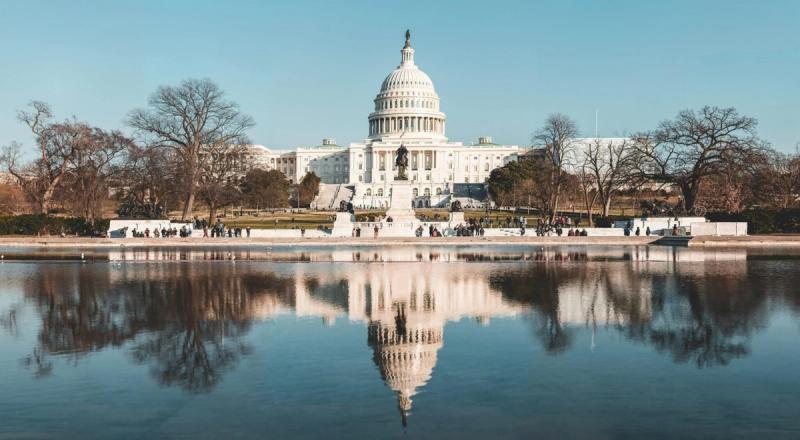
OBBBA Tax Changes: What You Need to Know in 2026
The One Big Beautiful Bill Act (OBBBA), signed on July 4, 2025, introduced a raft of major tax changes that affect Americans as of this tax year. The changes represent the most comprehensive tax reform since 2017, with implications for individuals, families, and businesses nationwide.

SALT Deduction Expansion: What It Means for 2025–2029
One of the most important changes brought in by the One Big Beautiful Bill Act is the quadrupling of the SALT deduction cap to $40,000 starting in 2025. This represents a fundamental shift for high-earning taxpayers in states with substantial income and property taxes, creating significant but time-limited tax planning opportunities.

The Key Productivity Metrics to Assess Time and Cost in Tax Firms
Tax firms are facing increasing pressure to improve efficiency while maintaining service quality. What separates tax firms that achieve this from those that don't, however, isn't technical expertise—it's understanding where time goes and what it actually costs.

Change Management for Tax Firms
It's fair to say that tax firms are facing more demands now than ever. With clients expecting deeper insights, quicker responses, and greater value, the profession has moved far beyond simple compliance work into a more strategic advisory role.

How to Attract and Retain Top Tax Talent
From increased regulatory demands to heightened client expectations, the tax advisory industry is facing any number of challenges. Perhaps the most pervasive, however, is the ongoing talent shortage.

Tax Firm Succession Planning
Tax advisory firms are facing a stark demographic reality—many firm owners are approaching retirement without succession plans in place. More than just a personal oversight, it's a structural vulnerability that threatens client relationships, staff stability, and decades of accumulated business value.

What is the Alternative Minimum Tax? (Updated for 2026)
ISOs have a favorable tax treatment on exercise, but understanding your tax obligations and how to minimize your tax burden can be complicated. Before taking any decisions around your ISOs, it's important to understand the tax consequences and how that impacts potential future profits.
Get the newsletter
Tax and equity insights, delivered to your inbox.