
Insights on tax, equity, and building wealth
Guides and analysis from the Harness team and the advisors on the platform.

The 83(b) Election Explained: Why Timing Matters for Founders and Early Employees
The 83(b) election has a strict 30-day deadline with no extensions. Here’s how it works, who qualifies, and what happens if you miss the window.

RSUs vs. ISOs vs. NSOs: Comparing Equity Compensation Tax Treatment
RSUs, ISOs, and NSOs are taxed in three different ways. Compare ordinary income, AMT, and capital gains treatment with a worked example.

QSBS Exclusion in 2026: What Founders and Early Employees Need to Know After OBBBA
If you hold stock in a qualifying startup, the rules for how much of your gain is tax-free just changed — but only if your stock was issued after July 4, 2025. The One Big Beautiful Bill Act (OBBBA) rewrote Section 1202 of the tax code, the provision behind Qualified Small Business Stock (QSBS). There are now two separate QSBS regimes running side by side, and which one applies to your shares depends entirely on when you got them — the difference between waiting five full years to sell tax-free and selling a portion, tax-free, in year three.

What is the Alternative Minimum Tax? (Updated for 2026)
ISOs have a favorable tax treatment on exercise, but understanding your tax obligations and how to minimize your tax burden can be complicated. Before taking any decisions around your ISOs, it's important to understand the tax consequences and how that impacts potential future profits.

Angel Investing Guide: How to Start in 2025
Angel investing has evolved. Once reserved for venture insiders, early-stage investing is now more accessible to individuals looking to diversify their portfolio and get closer to innovation. In 2025, new tax advantages, stronger protections, and a surge in high-growth startups make it a compelling time to explore this asset class.

The Guide to Qualified Small Business Stock (QSBS) [Updated for 2025]
In the Advisor Corner this month, Tyler Stoviak, director and client advisor at Simon Quick Advisors, shares the benefits of Qualified Small Business Stock for entrepreneurs. Simon Quick Advisors is a Financial Advisory Firm on the Harness Wealth platform.

Understanding Employee Equity: RSAs vs RSUs
When companies offer stock to employees as part of their compensation, it often comes in the form of either RSAs (Restricted Stock Awards) or RSUs (Restricted Stock Units). While both give you a chance to own a piece of the company, they work differently.

Secondary Stock Sales Guide for Startup Employees Selling Private Stock
Table of Contents:

A Simple Guide: How to Report Sell-to-Cover RSUs on Taxes
If you've been granted restricted stock units (RSUs) as part of your compensation, you're probably wondering how to handle the taxes—especially if you’ve recently used, or plan to use, a sell-to-cover method to pay for taxes on those shares. We’ve got you covered with this guide to help you understand how to report sell-to-cover transactions on your tax return. And if you have questions, it can be helpful to talk to a tax professional.
Top 5 Equity Questions to Ask Before a Startup Job Offer
Table of Contents:

409A Valuation: How it Works and Common Questions
In this guide, we explain what a 409A valuation is along with the process from start to finish of getting a valuation for your business.

What Happens to Your Stock After Your Company is Acquired?
If you’re a startup employee or founder going through an acquisition, there are numerous ways it can play out depending on the structure of the deal. In this article, we explore the factors that may impact the value of your equity resulting from an acquisition. What happens to your equity depends on many details, including the terms of the deal, your type of equity, and how long you’ve worked at the company.
Equity Compensation: A Guide for Founders and Employees
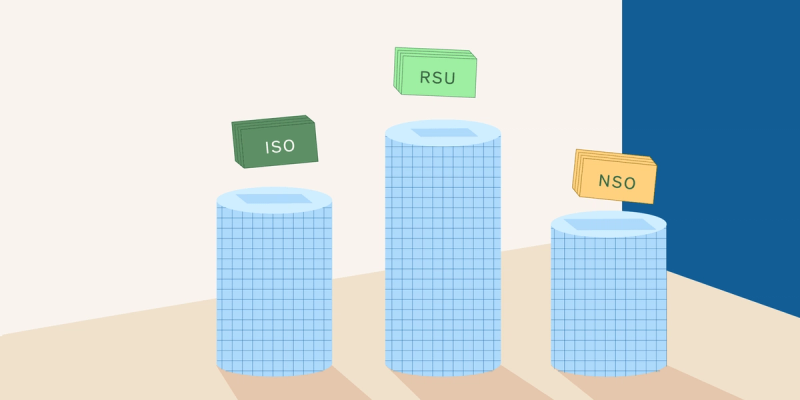
Equity compensation comes in various packages. In this article, we’ll define some of the most common forms of stock-based compensation issued by startups and established companies alike, including RSUs, ISOs, NSOs, and more. By understanding these concepts, you’ll be on your way to having the knowledge you need to make informed decisions about equity compensation packages, and understanding how Harness can help.

What is an 83(b) Election and Should You File One?
Navigating equity compensation can be challenging, especially when it comes to understanding tax implications. One essential tax-saving tool for startup founders and employees dealing with equity compensation is the 83(b) election. In this guide, we will provide you with a detailed understanding of the 83(b) election, including its benefits, potential risks, and the filing process, including:

Restricted Stock Units (RSUs): Everything You Need to Know
Restricted Stock Units (RSUs) are a popular form of equity compensation to retain talent. If you receive RSUs as part of a compensation package, they can become extremely valuable if your company grows, but they can also result in a tax bill once you own the stock. In this article, we’ll explain RSUs and how to best minimize your tax liability on any RSUs you may have now or in the future.

What is a Tender Offer? A Comprehensive Guide for Startup Employees
In the Advisor Corner this month, Tyler Stoviak, director and client advisor at Simon Quick Advisors, shares the benefits of Qualified Small Business Stock for entrepreneurs. Simon Quick Advisors is a Financial Advisory Firm on the Harness Wealth platform.

Reddit IPO: Planning ahead for 2023
These are the seven areas of your financial picture that you need to consider optimizing before year end, particularly after yet another tumultuous year.

Stripe: Navigating a Tender Offer in 2023
These are the seven areas of your financial picture that you need to consider optimizing before year end, particularly after yet another tumultuous year.

Tax Planning for Startup Founders and Employees
While it may seem premature to plan for reducing taxes as you're just getting off the ground, there are a few key tax-related decisions that are worth taking right from the beginning for many startups and their founders, given the high growth potential.

5 Tips to Set Yourself Up for Financial Success in 2023
These are the seven areas of your financial picture that you need to consider optimizing before year end, particularly after yet another tumultuous year.

Harness Tools: Equity Tax Insights
Whether you’re making $50,000 or $5,000,000 of W-2 income, there are only so many actions you can take to dramatically change your tax burden. With company equity, the tax treatment of those profits can be radically different.

How to Manage Equity in a Down Market
You waited patiently for years and now your company is finally public. It’s a really exciting milestone. But what happens after an IPO? Over the past few months, tech stocks have not all performed well. While it’s definitely not the result you were hoping for in the short-term, there are some silver linings to a depressed stock price that you can take advantage of.

How to Evaluate Your Equity in a New Role
You’ve worked for months to secure the perfect new job — and now you have the offer in hand. One of the most attractive components of the role is the equity. The hiring manager is telling you it’ll be worth a lot, so how do you assess what’s being offered?

The most frequent tax questions about equity compensation, answered
In this article we’ll share answers to questions that come up constantly in these sessions (you’re not alone!). If there’s anything you’d like more clarity on, join us for 1:1 Equity Tax Planning Session. You can sign up here.
Get the newsletter
Tax and equity insights, delivered to your inbox.